


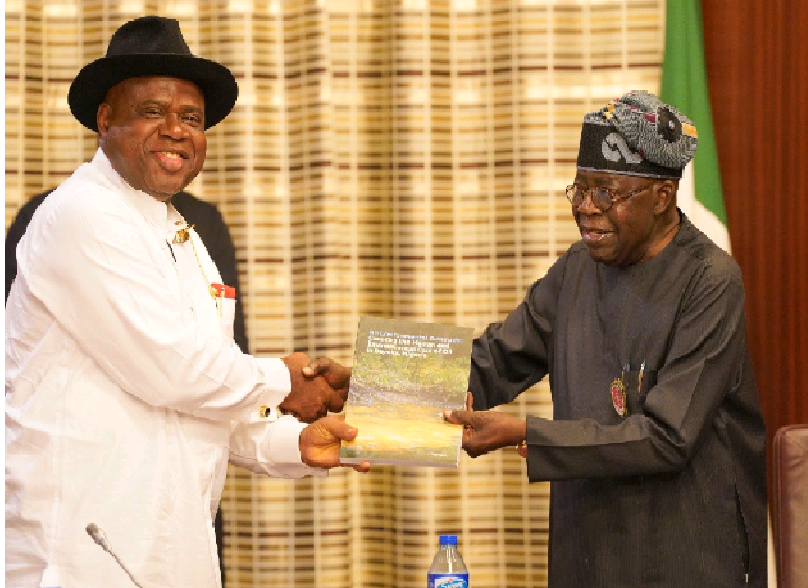
Governor Douye Diri mobilised residents of Bayelsa State for the official visit of President Bola Ahmed Tinubu, who arrived on Friday to commission a series of landmark infrastructure projects across the state.
The President touched down at the Bayelsa International Airport at approximately 2:55 p.m., where he was received by top government officials, traditional rulers, and an enthusiastic crowd of Bayelsans. From the airport, Tinubu proceeded to inaugurate the newly dualised New Yenagoa City Road One, a strategic corridor linking the airport to Tombia and Amassoma Road.
The commissioning ceremony attracted a large turnout of residents, including youths, women, elders, and community leaders, all of whom gathered in solidarity to welcome the President and witness the unveiling of the project. The road is expected to significantly enhance connectivity within the state capital and adjoining communities.
In addition to the road project, the President is scheduled to commission other critical infrastructure, including a 60-megawatt gas turbine independent power plant located in Elebele, the 630-metre Angiama-Oporoma Bridge, and the 42-kilometre Sagbama–Ekeremor Road. These projects are widely seen as vital to improving transportation, boosting energy supply, and stimulating economic activities across Bayelsa.
Speaking during the event, the Chairman of Yenagoa Local Government Area, Buloudiseye Ndiwari, expressed satisfaction with the pace of development under Governor Diri’s administration. He noted that the governor’s performance had surpassed expectations, particularly in the delivery of infrastructure that directly impacts the lives of the people.
Similarly, the Chairman of the Gbarain Ekpetiama Rural Development Authority, Tolumona Engedefa, commended the President for personally commissioning the projects. He also used the opportunity to appeal to the Federal Government to grant official recognition to the 32 rural development authorities established by the Bayelsa State House of Assembly as statutory local government areas.
Residents of the state also shared their excitement over the developments. Mrs. Ebitukemi Douglas, a civil servant, alongside Mrs. Favourite Fabiri, described the road project as a transformative initiative that would open up rural communities and attract investment.
They emphasised that the improved road network would ease movement, reduce travel time, and create new economic opportunities for businesses and residents, ultimately contributing to the overall growth and development of Bayelsa State.
Additionally many observers noted that the projects reflect growing collaboration between federal and state authorities, stressing that sustained investment in infrastructure remains essential for long-term prosperity and stability in the Niger Delta region, while urging continued maintenance and community engagement to safeguard the assets for future generations and inclusive development across the region in the years ahead for all.

